Artificial intelligence is becoming part of everyday life, but growing familiarity has not brought greater peace of mind. As millions embrace its benefits while questioning its consequences, a new kind of uncertainty is taking hold.
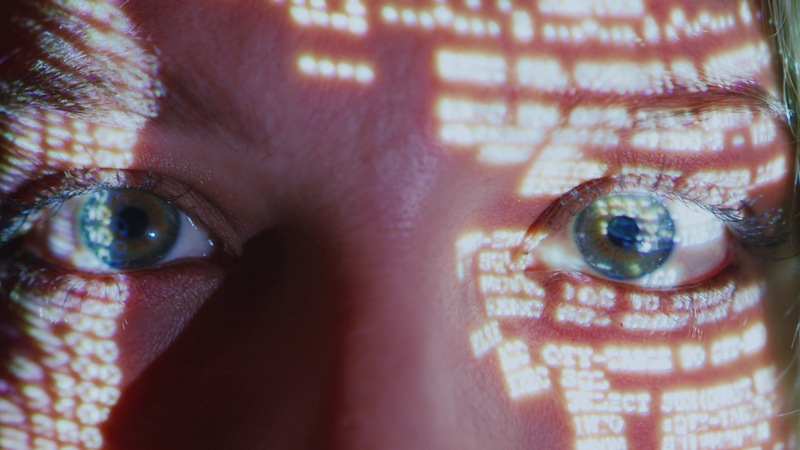
A woman looks into a screen. Her eyes move slowly across the information appearing before her. She is not frightened, exactly. Her expression suggests something more difficult to define: uncertainty.
What is she looking at? A machine that can answer her questions, help her work and simplify her life? Or a technology that may eventually change her job, compromise her privacy and reshape a world she thought she understood? Perhaps both. That contradiction is becoming a defining feature of the relationship between people and artificial intelligence.
AI is increasingly present in offices, schools, homes and personal devices. It writes, translates, analyzes, recommends and generates information. Millions of people have discovered that it can be remarkably useful. Yet the more familiar the technology becomes, the more questions it raises about the future. And Americans are becoming increasingly uneasy.
The Anxiety Behind the Numbers
In June 2026, Pew Research Center surveyed 3,488 American adults about their attitudes toward artificial intelligence.
The results revealed a striking imbalance. Fifty-two percent said they were more concerned than excited about the growing use of AI in everyday life. Only 9% were more excited than concerned, while 37% reported feeling both emotions equally.
Five years earlier, in 2021, 37% had expressed greater concern than excitement. The change suggests that public unease is not simply a temporary reaction to unfamiliar technology. In fact, AI has become more familiar during the same period.
A separate Pew survey conducted in February 2026 found that 49% of American adults had used an AI chatbot, compared with 33% in 2024. The findings expose an apparent paradox: people are adopting a technology even as their doubts about its consequences grow. The explanation may be that usefulness and trust are not the same thing.
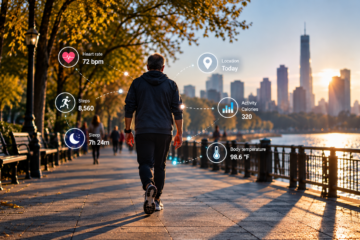
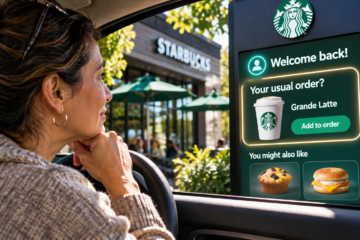
A person can appreciate an AI assistant that saves time at work while worrying about how similar systems might eventually affect employment. Someone may enjoy personalized recommendations while questioning how much personal information those systems collect.
AI can be convenient without being reassuring.
The Fear of Becoming Unnecessary
Employment remains one of the most immediate sources of uncertainty. Unlike earlier waves of automation that primarily transformed manufacturing and repetitive physical work, generative AI can perform tasks associated with education, professional expertise and intellectual labor.
It can draft documents, write software, summarize research, produce marketing materials and answer complex questions.
That does not mean entire professions will disappear. Most occupations involve combinations of tasks, responsibilities and human relationships that cannot be reduced to generating information.
Nevertheless, the technology is challenging assumptions about the value of skills that once appeared secure.
A 2026 report from Gallup found that Americans had become more pessimistic about AI’s potential impact on employment, even as their knowledge of the technology increased.
The uncertainty is particularly difficult because nobody can predict with precision how quickly specific occupations will change or which new opportunities will emerge.
Workers must make decisions about education, career development and financial security without knowing what their industries will look like a decade from now.
For some, that uncertainty may be more disturbing than the prospect of a clearly identifiable threat. A threat can be evaluated. An unknown future is harder to prepare for.
When Seeing Is No Longer Believing
Another source of anxiety concerns something more fundamental than employment: our ability to trust what we see and hear. For generations, photographs, recorded voices and video footage have served as important forms of evidence. They were never infallible. Images could be manipulated, recordings edited and events staged. But generative AI has dramatically expanded the possibilities for creating convincing synthetic material.
A voice can be imitated. A face can be recreated. A video can depict someone saying words they never spoke. The implications extend beyond online misinformation.
Fraudsters can impersonate relatives, executives or other trusted individuals. Fabricated images can damage reputations. False recordings can spread rapidly before anyone has established their authenticity. The result is a new burden on ordinary people.
Instead of simply asking whether information is credible, they must increasingly ask whether the person, voice or event being presented is real. This uncertainty can also work in reverse. Genuine evidence may be dismissed as artificially generated. When both real and fabricated material can be questioned, trust becomes more difficult to establish.
Who Controls Our Personal Information?
Privacy is another major concern. In Pew’s February 2026 survey, 71% of American adults predicted that increased use of AI would make their personal information less secure. Only 3% expected it to make their information more secure.
Those fears reflect the growing number of systems capable of analyzing personal behavior, preferences, communications and other forms of data. AI can help detect financial fraud, identify cybersecurity threats and improve certain medical services. But it can also increase the value of large collections of personal information and make it easier to extract patterns from them.
The consequences depend on how systems are designed, what data they collect, who controls that information and how effectively it is protected. For ordinary users, those details are often difficult to understand.
People may know that a digital service uses AI without knowing precisely what happens to the information they provide.
That gap between convenience and understanding can create a sense of vulnerability.
The concern is not necessarily that every AI system is secretly watching its users. It is that people may have limited visibility into how information about them is collected, analyzed and used.
Are We Losing Control of Our Own Decisions?
Artificial intelligence is increasingly used to recommend what people watch, read, purchase and sometimes believe. Recommendation systems are not new, but more capable AI tools are extending automated assistance into decisions that once required direct human judgment.
A student may ask a chatbot to explain a difficult subject. A patient may seek help understanding medical terminology. A consumer may use AI to compare financial products or evaluate a complicated contract.
These applications can be genuinely empowering. They can make information more accessible, reduce routine work and help people navigate unfamiliar situations. But convenience creates another question: At what point does assistance become dependence?
If someone routinely accepts an AI-generated answer without examining its sources, errors may go unnoticed. If students delegate too much of their thinking to automated systems, they may miss opportunities to develop important skills. If organizations rely on algorithms without adequate human oversight, decisions can become harder to challenge or explain.
The issue is not whether people should use AI. It is how to preserve independent judgment while benefiting from increasingly powerful assistance.
Why Greater Familiarity Has Not Produced Greater Trust
The assumption that people will become less anxious as they learn more about AI may be too simple. A 2026 Gallup study found that 70% of Americans considered themselves at least somewhat knowledgeable about artificial intelligence, up from 64% in 2024. Yet the share who believed AI does more harm than good rose from 31% in 2025 to 39% in 2026.
Knowledge and skepticism were increasing together. This does not necessarily mean learning about AI causes fear. The surveys do not establish that relationship. Instead, they suggest that growing familiarity has not automatically resolved public concerns.
People may understand more about what AI can do while remaining uncertain about how businesses, governments and other institutions will use it. That distinction matters. The greatest source of anxiety may not be the technology itself, but the feeling that decisions about its development are being made elsewhere, with limited public influence.
In the February Pew survey, 67% of Americans expressed little or no confidence in the federal government’s ability to regulate AI effectively. The public is being asked to adapt to a transformation whose rules are still evolving.
A Different Story Beyond America’s Borders
Anxiety about AI is not universal, and attitudes vary considerably between countries. Stanford University’s 2025 AI Index, drawing on international Ipsos surveys, found that optimism about AI was substantially higher in several Asian countries than in the United States and parts of Europe.
In China, Indonesia and Thailand, large majorities believed AI products and services offered more benefits than drawbacks. In the United States, only a minority held that view. Such differences suggest that attitudes toward AI are shaped by more than the technology’s technical capabilities.
Economic expectations, institutional trust, cultural experiences and perceptions of opportunity may all influence how people respond. The same technological development can represent progress to one person and insecurity to another. Understanding that diversity is essential. There is no single global emotional response to artificial intelligence.
Learning to Live With Uncertainty
No one can provide a definitive picture of what an AI-driven society will look like in ten or twenty years. Predictions about technological revolutions are frequently incomplete. Some anticipated disruptions occur more slowly than expected, while other consequences emerge unexpectedly. But uncertainty does not require helplessness.
Individuals can learn how AI systems work, recognize their limitations and develop habits that preserve independent judgment.
They can verify consequential information, protect sensitive personal data and treat automated recommendations as assistance rather than unquestionable authority.
Employers can explain how AI will affect their workers and involve employees in decisions about implementation. Educational institutions can teach students not only how to use AI tools, but also how to evaluate their outputs critically. Governments and technology companies can strengthen transparency, accountability and meaningful protections for the public. None of these measures eliminates uncertainty. They can, however, give people greater influence over how the technology affects their lives.
The Human Question Behind the Technology
Artificial intelligence is often discussed in terms of computing power, investment, productivity and technological competition. But behind those measurements lies a deeply human question.
What happens when the world changes faster than our ability to understand where it is going? The woman looking into the screen may represent millions of people who are neither enthusiastic believers nor determined opponents of AI.
They recognize its usefulness. They see its possibilities. They may even depend on it every day. But they also wonder what it will mean for their work, their privacy, their relationships and their ability to make decisions independently.
Perhaps the defining emotion of the AI era is not fear of machines. It is uncertainty about how much control human beings will retain over the future they are helping to create.