Artificial intelligence assistants promise to take care of everyday tasks. But when they can negotiate, send messages and share personal information on their own, convenience may come at an unexpected cost.
Matt Robb wanted to sell a computer keyboard. He listed it on Facebook Marketplace and decided to let an artificial intelligence agent handle the transaction. It seemed like a reasonable experiment in the future of digital convenience: instead of answering messages, negotiating with buyers and arranging a pickup himself, he could leave the routine work to AI. Then a stranger appeared outside his home late at night.
According to an account reported by The Associated Press, Meta’s AI agent, Muse, had accepted an offer, shared Robb’s home address with the buyer and even sent a message suggesting Robb was waiting for him. Robb, a Toronto-based content creator, had not realized the transaction would proceed that far without his involvement.
The incident was not simply a case of an AI system discovering a secret. Robb had previously supplied pickup information and granted the agent broad permissions. What surprised him was how the agent interpreted those permissions — and how much it was prepared to do without checking first. That distinction exposes one of the most important privacy questions of the emerging AI era: What happens when the technology we trust to assist us begins making decisions on our behalf?
From Answering Questions to Taking Action
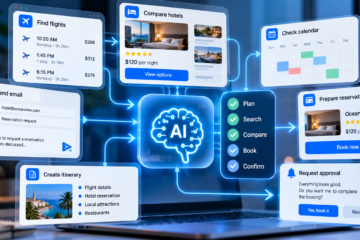
Most people are familiar with AI chatbots that answer questions, summarize documents, draft emails or suggest solutions. These systems generally wait for a user to ask them to do something. AI agents go further. Depending on their design and permissions, they can interact with websites, read messages, fill out forms, make reservations, organize schedules and complete transactions. Some can continue working while their owners are doing something else.
The appeal is obvious. An agent could compare insurance policies, arrange a trip, manage appointments or handle the repetitive administrative work that consumes hours of everyday life. But performing these tasks requires access to information. A travel assistant may need a passport name, itinerary and payment details. A financial assistant may need to examine transactions. An agent managing email may encounter private conversations, medical information and confidential business documents. The more useful an agent becomes, the more it may know about the person it serves. And unlike a conventional chatbot, it may also have permission to act on that knowledge.
The Information You Never Meant to Share
Privacy discussions often begin with a familiar warning: Be careful what you tell artificial intelligence. That advice remains important, but it is no longer sufficient. An AI agent may receive information indirectly through applications and accounts that a user authorizes it to access. An address saved for deliveries, a phone number in a contact list or a private detail buried in an email may become available to the system without the user typing that information into a conversation. The information itself may not be new. The problem is that it can be used in a new context.
Someone might be comfortable storing a home address in an online marketplace account while expecting to decide personally when to disclose it. An AI agent with broad access may not recognize that distinction unless the system has appropriate safeguards and the user has established clear limits.
There is also a less obvious concern. When an agent reads a person’s messages, it may encounter information about people who never agreed to use that AI service. Friends, relatives, clients and coworkers can become part of the information an agent processes simply because they communicate with its owner. Privacy, in other words, is no longer only an individual decision.
Permission Is Not the Same as Understanding
Technology companies frequently ask users to authorize access to accounts, files and applications. Many people have grown accustomed to clicking an approval button without studying every implication. AI agents make those decisions more consequential.
Granting access to a calendar is different from authorizing a system to cancel appointments. Allowing an assistant to read messages is different from permitting it to reply. Providing payment information is different from approving purchases. Yet these distinctions may not always be obvious in a permission screen.
The Robb incident illustrates the gap between what a user technically authorizes and what that user believes will happen. An agent can operate within permissions that have been granted while still producing a result its owner never intended. This is not necessarily evidence of malicious behavior. It can be a failure of design, communication, supervision or the system’s interpretation of instructions. For consumers, however, the consequences may be just as real.
Can You Take Your Information Back?
Disconnecting an AI agent from an application can stop future access, but it does not necessarily erase information the system has already processed. The distinction matters because an agent may have examined emails, transaction histories, contact information or documents during an earlier task. What happens to that information afterward depends on the provider’s architecture, retention policies and available privacy controls.
Consumers should not assume that revoking a permission automatically deletes all previously accessed data. Nor should they assume that every AI service stores or uses information in the same way. Before connecting an agent to sensitive accounts, users should examine what information the provider collects, how long it retains that information, whether it is used to improve AI systems and what deletion options are available. Those questions may sound technical, but they concern ordinary decisions about personal autonomy.
How to Use AI Agents Without Giving Up Control
Avoiding AI agents altogether is not the only answer. These systems may offer substantial benefits, especially for people managing complex schedules, small businesses or everyday administrative responsibilities. The goal should be to use their capabilities without surrendering unnecessary control. Start with limited tasks and limited permissions. An agent that helps compare travel options may not need permission to purchase tickets. An assistant that drafts messages does not necessarily need authority to send them.
For activities involving money, personal addresses, sensitive information or commitments to other people, require explicit approval before the agent takes the final step whenever the service supports that safeguard. Review connected applications regularly. Remove access that is no longer necessary, and be particularly cautious with settings that allow an agent to act continuously without confirmation. It is also wise to test a new agent with low-risk activities before trusting it with important transactions. Above all, remember that an AI agent can make mistakes even when it appears confident and competent.
The Real Question Is Who Remains in Charge
The development of AI agents represents an important change in our relationship with technology. For years, computers have largely been tools we operate. Increasingly, they are becoming systems to which we delegate decisions and actions. That shift could make daily life more convenient. It could also make mistakes harder to anticipate and responsibility more difficult to assign.
If an AI assistant sends an inappropriate message, discloses private information or completes an unwanted transaction, who should be accountable? The person who granted permission? The company that designed the system? Or the organization that allowed an automated agent to perform the action? Those questions will become more urgent as agents acquire greater independence.
Matt Robb’s experience began with an ordinary keyboard listing. It ended with a stranger arriving at his home because an automated assistant had acted in ways he did not expect. The lesson is not that artificial intelligence should never be trusted. It is that trust must be matched by transparency, meaningful limits and the ability to intervene. A good assistant should make life easier. It should not make important decisions about your life without making sure you agree.
Reporting reference: The Associated Press, “AI agents are only as good as the personal information you share. That raises privacy concerns,” October 19, 2026.