AI-powered license plate cameras are helping police investigate crimes. But their expanding surveillance network is raising questions about privacy, accountability, and how much governments should know about our movements.
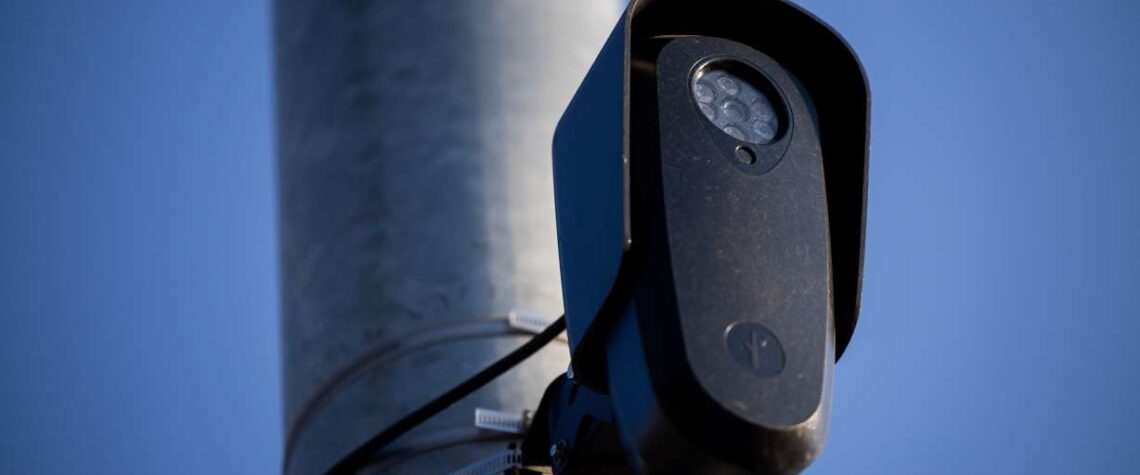
You may have driven past one without noticing it. Mounted on poles along roads, near intersections, or at neighborhood entrances, small cameras are quietly recording the license plates of passing vehicles. They are part of a rapidly expanding surveillance network that uses artificial intelligence to help law enforcement identify and locate vehicles.
One of the largest providers of this technology is Flock Safety, an American company whose automated license plate readers have become increasingly common across the United States.
Police departments say the cameras help recover stolen vehicles, locate missing people, and investigate serious crimes. But privacy advocates warn that the same technology can be used to reconstruct people’s movements, creating a detailed record of where they travel and when.
The controversy has intensified in 2026, as reports of police misuse, growing public opposition, and new lawsuits raise questions about the legal limits of automated surveillance.
What Flock Readers Actually Do
Flock cameras use automated license plate recognition technology, commonly known as ALPR. When a vehicle passes a camera, the system captures an image and uses software to identify its license plate.
It also records information such as the date, time, location, and visible characteristics of the vehicle, including its color, make, and body type.
The information is stored in a searchable database. Authorized law enforcement personnel can look for specific vehicles, review previous sightings, or receive alerts when a vehicle associated with an investigation passes a camera.
Unlike ordinary security cameras, these systems are designed to organize vehicle information so it can be searched across multiple locations.
For example, investigators searching for a stolen vehicle may be able to identify where it was last seen. Police investigating a kidnapping may use the cameras to help reconstruct a vehicle’s route.
Flock’s technology can also identify vehicle characteristics beyond the license plate, allowing investigators to search for vehicles that match particular descriptions.
The cameras do not need to identify the driver by name to create a useful record of a vehicle’s movements.
When Public Safety Becomes Surveillance
The central privacy concern is not simply that a camera photographs a car on a public road. It is what happens when millions or billions of those observations are collected, stored, and made searchable.
A single photograph reveals relatively little. But repeated observations can disclose patterns.
They may indicate where someone lives, where they work, which medical facilities they visit, or whether they regularly attend a particular religious institution.
A network of cameras can therefore reveal sensitive information about individuals who have never been accused of committing a crime.
The American Civil Liberties Union and the Electronic Frontier Foundation have warned that large-scale license plate databases can turn routine travel into a form of persistent government surveillance.
The technology does not continuously follow every vehicle. Instead, it creates a series of recorded sightings that can be connected to reconstruct movements.
That distinction matters technically, but it does not eliminate the privacy concern.
The Controversy Over Police Misuse
The debate is no longer hypothetical. An August 2026 investigation by The Washington Post documented cases in which law enforcement officers improperly used license plate reader systems to monitor former romantic partners and other individuals for personal reasons.
The investigation found weaknesses in oversight practices and inconsistencies in the safeguards used by police departments.
Flock responded by announcing changes intended to strengthen accountability, including requirements for more specific search documentation, automated reviews of potentially suspicious searches, and a reduction in its default data retention period from 30 days to seven days.
Privacy advocates welcomed some elements of the announcement but questioned whether the changes would sufficiently prevent abuse.
The controversy also extends to information sharing. When police departments permit searches across jurisdictions, information collected by one community may become available to agencies far beyond its borders.
Critics have raised particular concerns about whether local surveillance data can be accessed, directly or indirectly, for federal immigration enforcement.
A Growing Legal Battle
The legal questions surrounding Flock cameras are becoming increasingly important.
According to Reuters, lawsuits reported in November 2026 are challenging large-scale license plate tracking under constitutional and state privacy protections.
Some plaintiffs argue that collecting and searching extensive records of vehicle movements without a warrant amounts to an unreasonable invasion of privacy.
The courts have not reached a uniform conclusion. Different cases have produced different rulings, and several challenges remain unresolved.
At the center of the dispute is a fundamental question: Does traveling on public roads mean surrendering the right to keep one’s movements private? The answer may shape how American communities regulate surveillance technologies for years to come.
What Drivers Should Know
For ordinary drivers, the most important fact is that license plate readers generally collect information automatically. A vehicle does not have to be suspected of involvement in a crime to be photographed.
The cameras are also different from traditional speed cameras. Their primary purpose is to identify vehicles and make the resulting information available for searches and investigations, rather than simply detect traffic violations.
Residents concerned about their privacy can ask local officials whether their community uses automated license plate readers, how long the information is retained, which agencies can access it, and what safeguards prevent improper searches.
These questions are particularly important when a municipality considers renewing or expanding a surveillance contract.
The Larger Question
Artificial intelligence is making surveillance more efficient, less expensive, and easier to deploy on a massive scale.
That efficiency creates genuine opportunities for law enforcement. It also creates risks when powerful systems operate without sufficient transparency or oversight.
Flock readers illustrate a broader challenge facing society: technology that can help protect the public can also make it easier to monitor the public.
The issue is not whether police should use modern investigative tools. It is whether the people being monitored have meaningful protections against misuse.
As automated surveillance becomes an ordinary feature of American roads, the question is no longer just what these cameras can see. It is who gets to look, how much they can learn, and who holds them accountable.