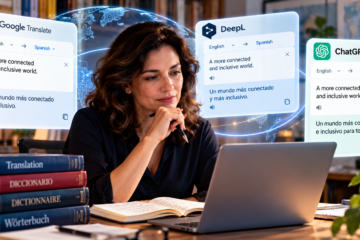
Artificial intelligence promises to put the world’s knowledge at our fingertips. But much of humanity’s experience has never been recorded on the internet, raising a troubling question: Whose knowledge is shaping the machines we increasingly depend on?
Imagine asking an artificial intelligence system how communities can survive prolonged droughts. It might recommend sophisticated irrigation equipment, satellite monitoring, automated sensors and expensive water-management technologies. Yet it could overlook a traditional method developed centuries ago by an Indigenous community that has successfully managed scarce water resources for generations.
The problem is not necessarily that the AI is incapable of understanding that knowledge. It may simply never have encountered it. Artificial intelligence systems learn from enormous collections of text, images and other data. Much of that material comes from the internet, which is often described as a vast repository of human knowledge. But the internet is not an equally representative record of human civilization.
It reflects profound differences in wealth, education, language, connectivity and political influence. Societies with abundant digital resources leave extensive records of their ideas and experiences. Communities with limited internet access, strong oral traditions or less widely spoken languages may leave comparatively little material for AI systems to learn from. The result is a technology that can appear remarkably knowledgeable while remaining surprisingly ignorant of entire dimensions of human experience.
The Invisible Workers of the Internet
To understand the problem, it helps to consider how information becomes available online. For decades, automated programs known as web crawlers have traveled across the internet, following hyperlinks and discovering pages. Google’s Googlebot and Microsoft’s Bingbot are familiar examples. These industrious digital workers help search engines discover and index the enormous volume of information published on the web. Other automated systems collect publicly accessible material for research, archiving and the creation of datasets that may be used in AI development.
One important source is Common Crawl, a nonprofit initiative that maintains a large archive of web content. But the ability to collect billions of pages does not guarantee that those pages represent humanity fairly. A crawler can discover a university’s extensive online library, a corporation’s product documentation or thousands of English-language news articles. It cannot automatically discover the unwritten ecological knowledge of a village elder or the cultural practices of a community whose history has been transmitted primarily through storytelling. Even when such knowledge is recorded, it may be inaccessible, restricted, poorly indexed or absent from the datasets selected for training. What is missing from the digital record can also be missing from the machine’s understanding.
The Language Divide
Language is one of the clearest examples of this imbalance. English occupies a disproportionately prominent position in many widely used internet datasets. Other languages, including some spoken by hundreds of millions of people, have historically received far less representation in the resources used to develop language technologies. This disparity has practical consequences.
An AI assistant may provide sophisticated explanations in English while offering less accurate, less detailed or culturally inappropriate answers in languages with fewer available training resources. The problem extends beyond translation. Languages carry cultural assumptions, historical experiences, humor, metaphors and ways of organizing ideas. A phrase that makes perfect sense within one cultural tradition may lose its meaning when translated literally into another.
A system that learns primarily from English-language material may become fluent in another language without acquiring the deeper cultural understanding associated with its speakers. It can learn the words without fully learning the world behind them.
When the Majority Becomes the Default
AI systems identify statistical relationships in their training data. When particular ideas, descriptions or cultural perspectives appear frequently, they can become especially influential in the patterns a model learns. This does not mean that an AI system simply repeats whatever the majority believes. Training methods, data selection and later adjustments all affect its behavior. Nevertheless, unequal representation can influence which answers seem natural, which examples appear familiar and which perspectives receive attention.
Consider an AI image generator asked to depict a successful businessperson, a beautiful home or a modern city. Depending on its training and instructions, it may gravitate toward familiar commercial imagery and aesthetic conventions rather than reflecting the enormous diversity of human societies. Similar problems can arise in education, healthcare, geography and history.
A system may provide technically correct information while neglecting regional practices or local circumstances that are essential to the person asking the question. These limitations become especially consequential when AI is treated not merely as a convenient assistant but as an authoritative source of knowledge.
The Knowledge That Was Never Digitized
Some of humanity’s most valuable knowledge exists outside conventional digital archives. Indigenous communities have developed sophisticated approaches to agriculture, water conservation, architecture, navigation and environmental stewardship. Much of this expertise has been refined through observation and experience over generations. Traditional ecological knowledge, for example, may describe relationships among plants, animals, weather patterns and seasonal changes that are poorly represented in mainstream scientific databases.
Oral histories preserve information about migration, social relationships and cultural identity that may never appear in written documents. Such knowledge is not inherently less rigorous or less useful because it was not published online. Yet AI systems trained primarily on digitized material can have difficulty incorporating it. The challenge is therefore larger than collecting more information. It requires reconsidering whose knowledge is valued, who has the authority to share it and who benefits when it becomes part of an AI system.
Teaching AI to Speak More Than English
Researchers are developing approaches intended to reduce these imbalances. One of the most promising is multilingual data curation: deliberately collecting, evaluating and organizing material in many languages rather than relying overwhelmingly on whatever information is easiest to gather online. The distinction is important.
Translating English-language material into Hindi, Swahili or Arabic may help an AI system communicate in those languages. But translation alone does not provide the local experiences, historical perspectives and cultural assumptions of the communities that speak them. A more inclusive approach involves working with native speakers to develop original material in their own languages. Cohere Labs’ Aya initiative illustrates this strategy.
The project brought together an international research community to develop multilingual AI resources. Its Aya 101 model was designed to follow instructions in 101 languages, including many that have historically received limited attention in AI research. The project also emphasized human contributions to multilingual datasets, recognizing that speakers possess linguistic and cultural knowledge that cannot always be captured through automated translation. The broader lesson is that language diversity must be deliberately incorporated into AI development. It cannot be left entirely to the uneven distribution of material already available on the internet.
More Languages Do Not Automatically Mean More Cultural Understanding
Expanding the number of languages an AI model supports is an important achievement, but it does not necessarily eliminate cultural bias. A system might answer questions fluently in dozens of languages while continuing to rely on similar underlying assumptions. Cultural understanding requires more than vocabulary. It involves recognizing local institutions, social customs, historical events, religious traditions, environmental conditions and the ways communities interpret their own experiences. Researchers therefore increasingly emphasize the quality and cultural relevance of training material, not simply its volume.
Evaluation methods must also improve. If developers measure AI performance primarily through English-language tests or questions designed from Western perspectives, important weaknesses elsewhere may remain undetected. A genuinely multilingual system should be evaluated by people who understand the societies and languages it is intended to serve.
From Data Subjects to Technology Partners
Another promising approach is participatory research, sometimes described as community science. Rather than treating local populations as passive sources of information, participatory projects involve them in defining research questions, collecting data, designing tools and deciding how the results will be used. This approach is especially important when artificial intelligence is applied to environmental management and Indigenous knowledge.
Consider Salmon Vision, a collaborative initiative that uses AI to help monitor wild salmon populations. The project works with First Nations, conservation organizations and researchers to analyze video and other monitoring data. AI systems can assist in identifying and counting fish, providing information that supports decisions about conservation and fisheries management. The Heiltsuk Nation in British Columbia is among the Indigenous partners involved in this broader effort.
The significance extends beyond the technology itself. AI can become more useful when it operates alongside local ecological knowledge and when communities participate in shaping the tools used to manage their resources. Instead of replacing human expertise, the technology can help communities apply it.
Who Owns Cultural Knowledge?
Efforts to make AI more inclusive also raise an ethical dilemma. If a community possesses valuable knowledge that is missing from commercial AI systems, should that knowledge automatically be collected and incorporated into their training data? The answer is not necessarily yes. Some information is culturally sensitive. Certain oral histories, ceremonies, environmental practices or linguistic resources may be governed by community rules about who may access them and under what circumstances.
Making AI more knowledgeable should not become an excuse to disregard those restrictions. This concern has contributed to growing interest in Indigenous Data Sovereignty: the principle that Indigenous peoples should have meaningful authority over the collection, ownership, access and use of data concerning their communities.
The CARE Principles for Indigenous Data Governance emphasize Collective Benefit, Authority to Control, Responsibility and Ethics. These principles challenge the assumption that information becomes freely available for commercial exploitation simply because it has been digitized. They also introduce an important distinction between making knowledge visible and making it available for unrestricted use.
A Māori Example of Technological Independence
In New Zealand, Te Hiku Media has developed language technologies designed to support the revitalization of te reo Māori. Drawing on extensive recordings and linguistic resources, the organization has helped create speech-recognition and transcription tools that serve Māori speakers and language preservation efforts. Its work also emphasizes community control over language data and the technological infrastructure used to process it. The example illustrates an alternative to the conventional model in which technology companies collect information from communities and retain control over the resulting systems. Here, language technology is developed with cultural preservation and community interests at its center. The objective is not simply to teach machines another language. It is to help ensure that the language, and the knowledge it carries, remains available to future generations on terms shaped by its own community.
Can Synthetic Data Fill the Gaps?
Another strategy involves synthetic data: artificially generated examples used to supplement existing training material. Synthetic data can help researchers develop additional language exercises, simulate uncommon situations or create examples for tasks where real-world data is scarce. It may be useful when carefully designed and evaluated by people with relevant expertise. But synthetic data has an important limitation. A model