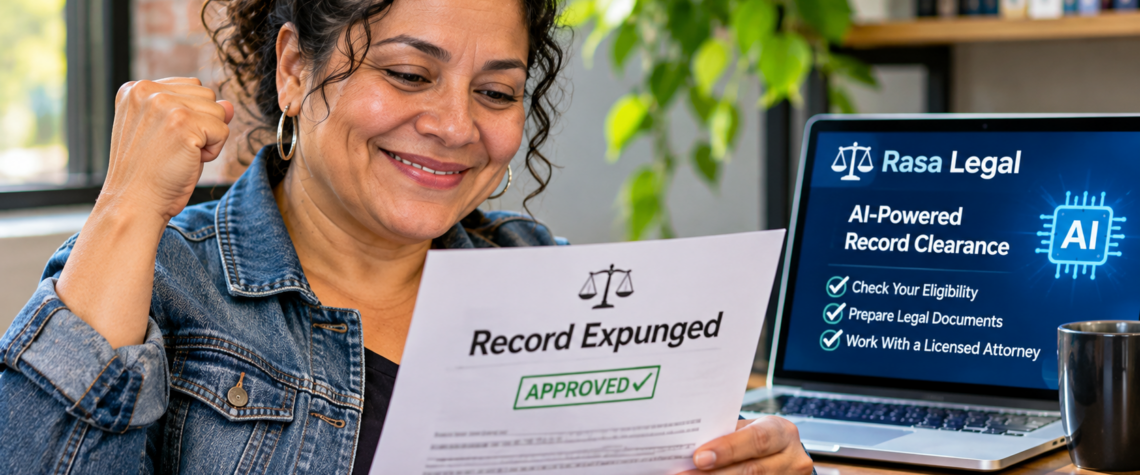
An attorney’s AI-powered platform is helping Americans clear eligible criminal records, opening new doors to employment, housing, and a fresh start.
For millions of Americans, completing a criminal sentence does not necessarily mean receiving a second chance. Long after they have paid their debt to society, a criminal record can continue to follow them into job interviews, housing applications, and background checks.
Even relatively minor offenses can create obstacles that last for years. And although many states allow certain criminal records to be sealed or expunged, the legal process can be complicated, expensive, and difficult to navigate without professional assistance.
Now, a former public defender from Utah is using artificial intelligence to make that process faster and more affordable.
Noella Sudbury, founder of Rasa Legal, has developed a technology-driven legal service that helps people determine whether their records qualify for clearance and assists attorneys in preparing the necessary court documents.
Her goal is straightforward: make the opportunity for a fresh start available to more people, not just those who can afford traditional legal representation.

A Lawyer Who Saw the Problem Up Close
Sudbury first became interested in criminal record clearance while working as a public defender in Utah.
She repeatedly encountered people who had completed their sentences, overcome addiction, or made substantial changes in their lives, only to discover that their past continued to prevent them from obtaining stable employment or housing.
In 2018, she began organizing expungement clinics in Salt Lake County. Hundreds of people attended, sometimes traveling long distances and bringing boxes of documents containing years of criminal history.
The demand was overwhelming.
Attorneys could spend an hour simply examining someone’s record to determine whether any offenses qualified for clearance. By the end of the evening, many people still had not received assistance.
Sudbury began wondering whether technology could reduce the administrative burden and allow attorneys to help substantially more clients.
That idea eventually became Rasa Legal, a company launched in 2022 that combines software automation, artificial intelligence, and professional legal representation.
How Artificial Intelligence Speeds Up the Process
Rasa’s platform allows users to complete an initial eligibility screening in approximately three minutes.
The software helps identify criminal records, organize case information, and determine which offenses may qualify for sealing, expungement, or other forms of legal relief under applicable state laws.
Artificial intelligence also assists with preparing court petitions and supporting statements.
Tasks that once required attorneys to examine extensive documentation and complete numerous forms can now be performed much more efficiently.
According to Sudbury, the time required to handle an individual record-clearance case has fallen from approximately 10 to 12 hours to about five hours.
That reduction allows the company to offer services at a lower cost than many traditional law firms.
But the technology does not independently determine whether a record will be cleared.
Attorneys review the documents prepared with AI assistance, and courts make the final legal decisions.
Sudbury acknowledges that the technology has made mistakes, particularly during its early development. Human supervision remains an essential part of the process.
One Woman’s Journey From Prison to a New Career
The human impact of this technology is illustrated by the experience of Virginia Mireles, whose story was documented by NPR.
Mireles grew up in poverty in Tucson, Arizona, and began using heroin when she was 14.
Her addiction led to repeated encounters with the criminal justice system. Over more than two decades, she spent a combined 17 years incarcerated.
When she returned to society, she encountered a familiar problem: finding employment and housing with multiple felony convictions on her record.
Mireles wanted to change her life, but background checks repeatedly reminded her of the past she was trying to leave behind.
In 2023, she met Sudbury at an event focused on restorative justice.
After learning about Rasa, Mireles used the company’s online screening tool and discovered that all five of her felony records could potentially be cleared.
She subsequently succeeded in clearing those records.
Today, Mireles works for Rasa Legal, helping prospective clients understand the record-clearance process.
Her role is particularly meaningful because she can speak from personal experience.
People who contact the company often face the same uncertainty, shame, and frustration she once experienced. Mireles understands those feelings and can explain what the process meant for her own life.
For Sudbury, that human connection is something artificial intelligence should support rather than replace.
Millions of Americans May Be Eligible
The potential demand for record-clearance services is enormous.
Estimates have long suggested that more than 70 million American adults have some form of criminal record, including convictions and arrests that may appear in background checks.
Not all those records qualify for expungement.
However, research by University of California, Berkeley law professor Colleen Chien estimated that at least 20 million people could obtain partial or complete record clearance under existing laws but had not done so.
Researchers sometimes describe this problem as the second-chance expungement gap.
The reasons are varied.
Some people do not know that their records may be eligible for clearance. Others cannot afford an attorney, do not understand the required paperwork, or live in jurisdictions where the process is especially complicated.
Artificial intelligence could help reduce some of those obstacles by making eligibility information more accessible and lowering the administrative costs of legal assistance.
Why Clearing a Criminal Record Matters
A criminal record can affect much more than a person’s reputation.
Employers frequently conduct background checks before making hiring decisions. Landlords may review criminal histories before approving rental applications. Certain professional licenses can also be difficult to obtain.
These restrictions can persist even when an individual has completed all legal requirements and remained out of trouble for years.
Research cited in the NPR investigation found that people who obtain record clearance can experience substantial economic improvements, including an average wage increase of approximately 22% within a year.
Stable employment and housing are also associated with a reduced risk of returning to criminal activity.
Record clearance therefore has implications beyond individual opportunity. It can benefit families, employers, communities, and public safety.
But the benefits depend on the type of relief granted. Sealing a record does not necessarily erase it from every government database, and some employers or licensing authorities may retain access under applicable laws.
Why the Law Makes This Complicated
Unlike some legal matters governed by uniform federal rules, criminal record clearance largely depends on state law.
Each state establishes its own eligibility requirements, waiting periods, procedures, and restrictions.
Some states have enacted Clean Slate laws that automatically clear certain eligible records.
Others require individuals to petition a court.
Even within a single state, different counties may use different forms or administrative procedures.
For a company such as Rasa, expanding into a new state involves more than installing software.
Its team must understand the relevant laws, establish access to reliable records, and develop procedures that comply with local court requirements.
AI can help process information and prepare documentation, but it cannot eliminate the legal differences between jurisdictions.
Rasa’s official website currently lists Utah, Arizona, Pennsylvania, and Oregon as states where it offers record-clearance services.
How Much Does the Service Cost?
Rasa offers a free initial eligibility screening through its website.
According to NPR’s August 2026 report, the company charged $25 for an attorney consultation and a flat fee of $500 per case for legal representation, including applicable court and government filing fees.
Prices and terms should be confirmed directly with the company before purchasing services.
The initial screening does not guarantee that a record can be cleared, and even an eligible petition may require additional documentation or court review.
The company reported that more than 90% of the petitions it filed were approved, but that figure applies to cases selected for filing, not to everyone who uses the screening tool.
Its current website also distinguishes between people who have checked their eligibility and records successfully sealed or expunged.
That distinction matters: using an AI tool is only the beginning of a legal process, not proof that the process has been completed.
What You Can Do If You Have a Criminal Record
People interested in clearing their records should begin by understanding the laws of the state where their cases occurred.
Many states provide official court information about expungement, record sealing, and eligibility requirements. Legal aid organizations and nonprofit groups may also offer free or reduced-cost assistance.
An eligibility screening service can help identify possible options, but individuals should verify the results before submitting legal documents or paying for representation.
They should also ask what kind of relief is available, whether a court petition is required, how long the process may take, and whether the cleared record could still be accessible to certain agencies or employers.
Rasa Legal’s screening service is available at https://rasa-legal.com.
The website provides information about the states currently served and the services offered.
AI as a Tool for Access to Justice
Much of the public debate about artificial intelligence focuses on whether machines will replace workers, eliminate professions, or concentrate economic power in a small number of technology companies.
Rasa Legal presents a different possibility.
Instead of replacing attorneys, its technology helps them spend less time on repetitive administrative work and potentially serve more people who would otherwise struggle to obtain legal assistance.
The model is not without limitations. AI-generated legal documents can contain errors, state laws remain complex, and affordable representation is still beyond the reach of some households.
Nevertheless, the approach demonstrates how artificial intelligence can be used to address a longstanding social problem.
The most important achievement is not that a computer can examine criminal records in minutes or help prepare legal petitions.
It is that someone who has spent years being rejected because of a past mistake may finally have a practical way to move forward.
For people seeking a second chance, the value of artificial intelligence may ultimately be measured not in the time it saves, but in the opportunities it helps restore.