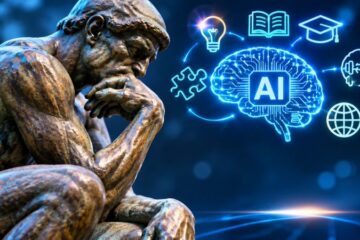
New blood tests, artificial intelligence, and emerging treatments are bringing fresh hope to Alzheimer’s research. But while scientists are making remarkable progress, a cure remains elusive.
For millions of families, Alzheimer’s disease begins with small, unsettling changes. A forgotten appointment. A familiar name that suddenly becomes difficult to remember. A conversation repeated minutes after it has ended. Over time, those moments can develop into a devastating loss of memory, independence, and recognition.
For decades, researchers have struggled to understand why the disease develops and how to stop it. Billions of dollars have been invested in treatments, yet Alzheimer’s remains incurable.
Now, a new generation of diagnostic tools, experimental medicines, and artificial intelligence systems is changing the scientific landscape. Among those who believe a turning point may be approaching is Microsoft co-founder Bill Gates, whose commitment to Alzheimer’s research is deeply personal.
In June 2026, Gates published an essay declaring that the world was entering a golden age of Alzheimer’s research. His optimism rests on several developments: more accessible blood tests, the first drugs capable of modestly slowing the disease, unprecedented access to biological data, and AI systems that can help scientists investigate questions once considered too complex or time-consuming.
The central question is whether these advances will eventually lead to a cure—or whether they represent an important but still limited improvement in our ability to diagnose and manage the disease.
A Personal Battle Behind the Scientific Mission
Gates became involved in Alzheimer’s research in 2017, initially concerned about the enormous human and economic costs of dementia. His interest became even more personal as his father lived with the disease. William H. Gates Sr. died in 2020.
Like countless families, the Gates family experienced the painful progression of an illness that gradually undermines memory and cognitive abilities.
In his June essay, Gates recalled how powerless he felt upon learning of his father’s diagnosis. He also described how dramatically the research environment has changed since he began supporting the field.
His optimism is not based on a single breakthrough. Instead, it reflects the convergence of several scientific developments that may reinforce one another.
Better diagnostic tests can identify more patients at earlier stages. Earlier identification can improve recruitment for clinical trials. Larger and better-designed trials can generate more useful data. Artificial intelligence can then help researchers analyze those findings and identify promising new directions. It is a potentially powerful cycle of discovery.
How Artificial Intelligence Is Changing Alzheimer’s Research
One of the greatest obstacles in Alzheimer’s research has been the complexity of the human brain. The disease involves biological changes that may begin many years before noticeable memory problems appear. Scientists study abnormal accumulations of amyloid-beta and tau proteins, inflammation, genetic factors, and other processes that may contribute to damage in the brain.
Understanding how these factors interact requires analyzing enormous quantities of information, including brain scans, genetic sequences, protein measurements, medical histories, and results from clinical trials.
This is where artificial intelligence may make a significant difference. AI systems can examine large datasets, identify statistical relationships, and help researchers formulate hypotheses that would otherwise require months of manual analysis.
Gates has highlighted research assistants called Biomni-AD and Parthenon, recognized through the Alzheimer’s Insights AI Prize. These tools are designed to help scientists retrieve authorized datasets, perform analyses, and investigate patterns across different sources of information.
Rather than replacing researchers, such systems can assist with the repetitive and technically demanding work that consumes much of their time.
The National Institutes of Health has also reported progress with AI-based tools that analyze brain imaging and clinical information to help distinguish different forms of neurodegeneration.
But identifying a pattern is not the same as discovering its cause. An AI-generated hypothesis still needs to be tested through rigorous scientific research.
That distinction is especially important in medicine, where an incorrect conclusion can lead to ineffective treatments or misleading expectations.
A Blood Test Could Change Everything
For many years, confirming the biological signs of Alzheimer’s often required expensive brain imaging or an examination of cerebrospinal fluid obtained through a lumbar puncture.
New blood tests are making that process less invasive and potentially more accessible.
Some of these tests measure biomarkers such as phosphorylated tau, including p-tau217, which can provide evidence of biological changes associated with Alzheimer’s disease.
In August 2026, the Alzheimer’s Association welcomed FDA clearance of another blood-based test designed to assist clinicians in evaluating patients with signs of cognitive impairment.
The significance goes beyond convenience. If doctors can identify Alzheimer’s-related changes earlier and more efficiently, patients may gain access to appropriate evaluations and treatments sooner. Researchers may also find it easier to recruit participants for clinical trials.
An NIH-supported study published in February 2026 explored whether changes in blood biomarkers could help estimate when symptoms might begin. The results were encouraging for research, but the model was not accurate enough to predict the future of an individual patient reliably.
Blood tests are therefore not a universal screening solution. They must be interpreted within a comprehensive medical evaluation, and their use in people without cognitive symptoms remains limited.
The First Treatments That Can Slow the Disease
Perhaps the most important recent development is that Alzheimer’s treatment is no longer limited entirely to managing symptoms.
Two medications, lecanemab, marketed as Leqembi, and donanemab, marketed as Kisunla, have received FDA approval for certain patients with early Alzheimer’s disease.
These drugs target amyloid-beta, a protein associated with plaques in the brains of people with Alzheimer’s.
Clinical studies have demonstrated that the medications can modestly slow cognitive and functional decline in eligible patients.
That represents meaningful progress after decades of disappointing drug trials.
However, neither treatment restores memories already lost, reverses extensive brain damage, or cures Alzheimer’s.
The drugs also carry potentially serious risks, including brain swelling and bleeding. Patients require careful evaluation and monitoring, and the treatments are not appropriate for everyone.
Researchers are now investigating whether intervening even earlier—before substantial cognitive damage develops—could produce greater benefits.
Gates has expressed particular interest in research examining whether donanemab might delay the onset of Alzheimer’s symptoms in people who have not yet developed dementia.
If prevention trials eventually demonstrate a meaningful benefit, they could transform the way physicians approach the disease.
For now, however, preventing Alzheimer’s with these drugs remains an unproven possibility.
Could AI Discover the Next Generation of Medicines?
Artificial intelligence may also help scientists identify entirely new therapeutic approaches.
Traditional drug discovery is expensive, slow, and uncertain. Researchers must identify biological targets, develop candidate compounds, evaluate their safety, and conduct clinical trials that can take years.
AI may accelerate parts of this process by analyzing molecular interactions, exploring biological pathways, and helping researchers prioritize promising candidates.
For Alzheimer’s, that could mean investigating mechanisms beyond amyloid, including tau-related damage, inflammation, and changes in brain-cell metabolism.
This broader approach matters because Alzheimer’s is unlikely to be explained by one simple biological process.
Some scientists are also investigating whether the disease includes distinct subtypes that may respond differently to treatment.
If that proves true, the future of Alzheimer’s medicine may resemble other areas of personalized healthcare, where treatments are selected according to a patient’s particular biological characteristics.
AI could help researchers recognize those differences.
But there is a substantial distance between identifying a promising molecular target and proving that a treatment is safe and effective in human patients. Artificial intelligence can accelerate investigation; it cannot eliminate the need for clinical evidence.
Can AI Detect Alzheimer’s Through the Way We Speak?
Another intriguing research direction involves something people do every day: speaking.
Scientists are investigating whether subtle changes in vocabulary, sentence construction, pauses, or speech patterns might reveal early signs of cognitive decline.
Machine-learning systems can analyze recordings and search for patterns that may be difficult for human listeners to recognize consistently.
In the future, such tools could potentially help clinicians identify patients who need further assessment or monitor changes over time.
The appeal is obvious. A brief speech assessment could be less expensive and less invasive than many conventional diagnostic procedures.
Yet important questions remain. Speech varies with education, native language, accent, culture, emotional state, and numerous medical conditions unrelated to Alzheimer’s. A system trained primarily on one population may perform less reliably in another.
Researchers must therefore demonstrate that these tools are accurate, fair, and clinically useful across diverse populations. At present, an AI speech assessment should not be mistaken for a definitive Alzheimer’s diagnosis.
The Problem of Access
Even if scientific progress accelerates, another challenge remains: ensuring that patients can benefit from it.
Advanced diagnostic tests and treatments can be costly. Some medications require specialized facilities, repeated appointments, and ongoing monitoring.
Access may be particularly difficult for rural communities, lower-income patients, and people who live far from major medical centers.
The NIH has reported disparities in the use of newer Alzheimer’s treatments among different groups of Medicare beneficiaries.
Artificial intelligence could eventually help expand access to certain diagnostic services, but technology alone will not solve inequalities in healthcare.
Insurance coverage, clinical infrastructure, affordability, and the availability of trained specialists will remain critical. A breakthrough that reaches only a small percentage of patients cannot fully deliver on its promise.
What Patients and Families Should Know Today
For people worried about memory loss, the most important message is that earlier medical evaluation can be valuable—but not every memory problem is Alzheimer’s disease.
Sleep disorders, medication effects, depression, nutritional deficiencies, and other medical conditions can also affect memory and concentration. Some are treatable.
A physician can assess symptoms, consider other possible causes, and determine whether specialized cognitive testing or Alzheimer’s biomarkers are appropriate.
People already diagnosed with early Alzheimer’s can ask their healthcare providers whether newer treatments might be suitable, including a discussion of potential benefits, risks, eligibility, and monitoring requirements.
Families should also be cautious about online advertisements promising that artificial intelligence has discovered a secret cure or that a commercial test can predict Alzheimer’s with certainty.
No such cure has been established. The most reliable guidance continues to come from qualified medical professionals and evidence-based research.
A Future That May Be Closer—but Is Not Here Yet
Bill Gates has compared the current moment in Alzheimer’s research to earlier periods of medical progress when scientists began to understand diseases that once seemed impossible to treat effectively.
His optimism reflects genuine developments.
Blood tests are improving the ability to detect Alzheimer’s-related changes. New medications have demonstrated that slowing the disease is possible. Researchers are exploring prevention strategies. Artificial intelligence is giving scientists more powerful ways to investigate the biological mysteries of the brain.
But optimism should not be confused with certainty. There is still no proven cure for Alzheimer’s disease, and many promising discoveries will fail when subjected to the demanding standards of clinical trials.
The real achievement may be that researchers are beginning to ask better questions—and have better tools with which to answer them.
For families facing Alzheimer’s today, progress cannot come quickly enough.
For the scientists working toward tomorrow’s treatments, artificial intelligence may help shorten the distance between a promising discovery and a medicine that changes lives.
Whether that journey ultimately leads to a cure remains unknown.
What has changed is that the search is gaining powerful new tools—and, with them, new reasons for hope.
Sources and further reading
- Bill Gates, We’re Entering a Golden Age of Alzheimer’s Research, Gates Notes, June 2, 2026.
- National Institute on Aging, 2026 NIH Alzheimer’s Disease and Related Dementias Research Progress Report.
- Alzheimer’s Association, Amyloid-Targeting Treatments for Alzheimer’s.
- Alzheimer’s Association, Statement on FDA Clearance of Elecsys pTau217 Blood Test, August 24, 2026.
- National Institutes of Health, Blood Test Predicts Start of Alzheimer’s Disease Symptoms, 2026.
- Alzheimer’s Association, Clinical Practice Guideline on Blood-Based Biomarkers, 2025.