

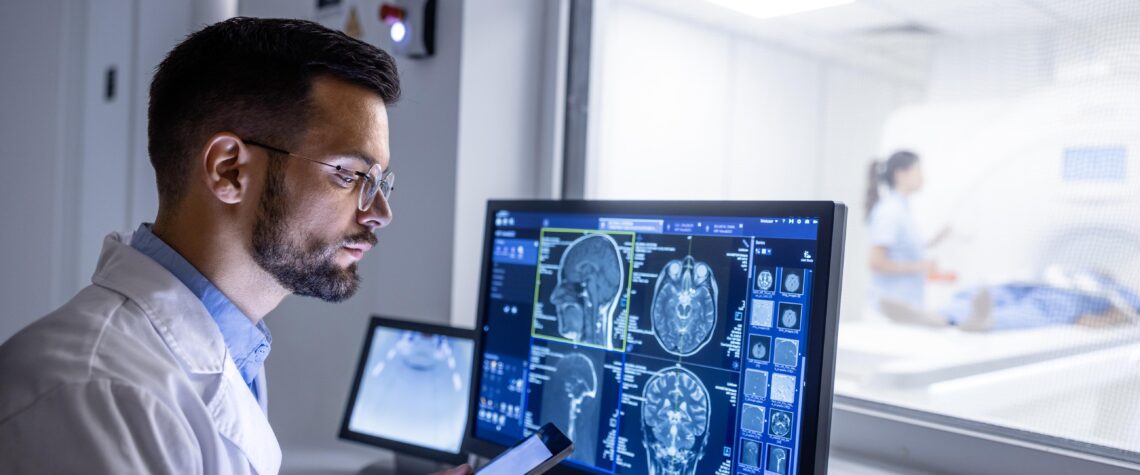
As artificial intelligence moves deeper into healthcare, technology companies are discovering that sophisticated algorithms are not enough. Understanding the human brain, interpreting medical evidence, and protecting patients require expertise that only trained clinicians can provide.
Artificial intelligence may be transforming medicine, but some of the most important people behind that transformation are not computer programmers. They are physicians, neurologists, neuroscientists, and clinical researchers who understand the complexities of the human body and the consequences of getting a diagnosis wrong.
At Google and other major technology companies, the relationship between medicine and artificial intelligence has become increasingly important. As AI systems learn to interpret medical images, analyze patient records, and assist with clinical decisions, the expertise of healthcare professionals is essential to evaluating their performance and identifying potentially dangerous mistakes.
The collaboration reflects a fundamental challenge facing the technology industry: developing an AI system capable of processing enormous amounts of medical information is one thing. Making that system reliable enough to assist a physician is another.
When Silicon Valley Turned to Brain Science
Google’s interest in neuroscience and healthcare is not new. In 2015, Dr. Thomas Insel, then director of the National Institute of Mental Health, announced that he was leaving the federal research agency to join the life sciences division of Alphabet, Google’s parent company.
Insel had spent years studying mental illness and the biological mechanisms underlying psychiatric disorders. His move reflected growing interest in whether digital technologies could improve the detection, monitoring, and treatment of mental health conditions.
The initiative was ambitious. Researchers hoped that smartphones, sensors, data analysis, and emerging computational technologies could provide new insights into conditions that had traditionally been difficult to measure objectively.
Insel departed Verily, Alphabet’s life sciences company, in 2017. Nevertheless, his recruitment illustrated an important development: technology companies increasingly recognized that progress in digital healthcare required scientists who understood medicine as well as engineers who understood computers.
Today, that interdisciplinary approach is even more relevant as generative AI enters medical research and clinical practice.
Teaching AI to Understand Medical Evidence
One of the most important contributions of medical specialists is helping developers evaluate whether AI systems correctly interpret clinical information.
Google has developed several healthcare-oriented AI technologies, including MedGemma, a family of models designed to process medical text and images.
These models can support research and development involving radiology, medical documentation, and other forms of clinical information. Newer versions have expanded their ability to work with complex imaging, including CT scans and MRI data. But recognizing patterns in an image is not equivalent to understanding a patient’s medical condition.
Consider a neurological examination. A physician evaluating a patient with suspected Parkinson’s disease may consider movement, muscle rigidity, medical history, medications, and changes in symptoms over time. An AI system might detect certain patterns in video recordings or clinical data, but determining what those patterns mean requires medical expertise and rigorous testing.
Neurologists and other specialists can help researchers design appropriate evaluations, identify misleading results, and determine whether an AI system is clinically useful. Importantly, Google’s MedGemma models are development tools rather than independently authorized diagnostic systems. Their outputs require validation and professional assessment before use in patient care.
The Dangerous Problem of Medical Hallucinations
One of the greatest challenges facing medical AI is a phenomenon known as hallucination. An AI system may generate an answer that sounds authoritative but contains incorrect information, invented findings, or conclusions unsupported by the available evidence.
In ordinary applications, such mistakes may be inconvenient. In healthcare, they can be dangerous. A system that incorrectly interprets a brain scan, overlooks an important symptom, or invents a detail in a patient’s medical history could influence decisions with serious consequences.
Research published in npj Digital Medicine in 2025 examined hallucinations in AI-generated clinical notes. Investigators identified errors that included fabricated information, incorrect negations, and misleading clinical relationships. Some were classified as potentially consequential for diagnosis or patient management. This is why medical professionals remain essential to the development and evaluation of healthcare AI.
Clinical experts can identify errors that may escape conventional software testing. They can also help determine whether an AI-generated explanation is medically reasonable, whether important information has been omitted, and whether a system should be trusted in a particular clinical setting.
Their participation does not eliminate hallucinations. It provides an essential layer of oversight in a field where accuracy is inseparable from patient safety.
Can AI Learn to Conduct a Medical Consultation?
Google is also exploring a more ambitious possibility: AI systems capable of participating in sophisticated medical conversations. Its experimental system, known as AMIE — Articulate Medical Intelligence Explorer — has been developed to investigate how conversational AI might assist with clinical reasoning and medical consultations.
In August 2026, Google researchers described an advanced version capable of conducting real-time video consultations in simulated clinical settings. Unlike a conventional chatbot, the experimental system can process spoken conversation and visual information, allowing it to consider some of the nonverbal observations physicians routinely make during examinations.
Researchers evaluated the system through hundreds of simulated consultations involving patient actors and medical professionals. The results suggested that AI could eventually become a more capable assistant in clinical encounters. However, Google acknowledged that further validation with real patients is necessary.
The distinction matters. Performance in a controlled experiment does not establish that a system is safe or effective for independent clinical practice.
Google is also studying conversational AI in real-world healthcare environments, including research collaborations with Beth Israel Deaconess Medical Center and Included Health. These studies represent steps toward understanding how AI might support physicians without replacing the professional judgment on which medical care depends.
Giving Doctors More Time With Patients
Not every medical AI application involves diagnosing disease. Some of the most immediate opportunities involve reducing the administrative burden on healthcare professionals.
Physicians often spend substantial time documenting appointments, reviewing records, preparing summaries, and entering information into electronic health record systems. AI-powered documentation tools aim to simplify these tasks by organizing clinical information and generating drafts for professional review.
Google Cloud has been developing technologies that can summarize medical records, assist with documentation, and help healthcare organizations retrieve relevant patient information.
Medical specialists are important to this work because clinical language is complex. A seemingly minor difference in wording can change the meaning of a medical record. For example, a note stating that a patient has no history of seizures conveys something very different from a note suggesting that seizures have occurred. An AI system must distinguish between those statements reliably.
The goal is not simply to make documentation faster. It is to reduce unnecessary administrative work without compromising the accuracy and completeness of medical records.
What Neuroscience Can Teach Artificial Intelligence
The relationship between neuroscience and AI also extends beyond healthcare. Artificial neural networks were originally inspired, in broad terms, by the organization of biological nervous systems. Although today’s AI models are not faithful replicas of the human brain, neuroscience continues to offer researchers insights into learning, perception, memory, and information processing.
Understanding how biological systems process complex information may inspire new approaches to machine learning. At the same time, artificial intelligence provides neuroscientists with powerful tools for analyzing brain images, neural recordings, and large research datasets.
The exchange works in both directions: neuroscience can inform AI research, while AI can help scientists investigate the brain. However, these connections should not be confused with evidence that artificial intelligence thinks, understands, or experiences the world in the same way humans do.
The similarities between biological and artificial neural networks remain limited, and many fundamental questions about human cognition are still unresolved.
The Future of Medical AI Is a Collaboration
As AI systems become more sophisticated, the role of medical experts may become more important rather than less. Software engineers can develop models capable of processing enormous volumes of information. But physicians and clinical researchers help determine whether that information is meaningful, whether conclusions are supported by evidence, and whether a system can be used safely.
The challenge is particularly significant in neurology, where symptoms can be subtle, diagnoses may depend on multiple sources of evidence, and errors can have lasting consequences. The next generation of healthcare AI may help doctors detect diseases earlier, interpret complex medical information, and spend more time with patients. Yet realizing those possibilities will require clinical studies, transparent evaluation, privacy protections, and continued human oversight.
Google’s investments in medical AI illustrate a broader transformation underway across the technology industry. The future of healthcare will not be built by algorithms alone. It will depend on how successfully computer scientists, physicians, neuroscientists, and patients work together to ensure that increasingly powerful technology serves the people whose lives it may affect.






