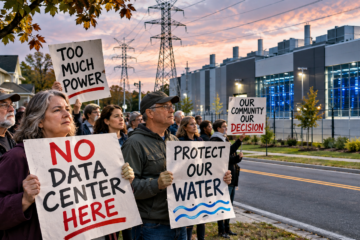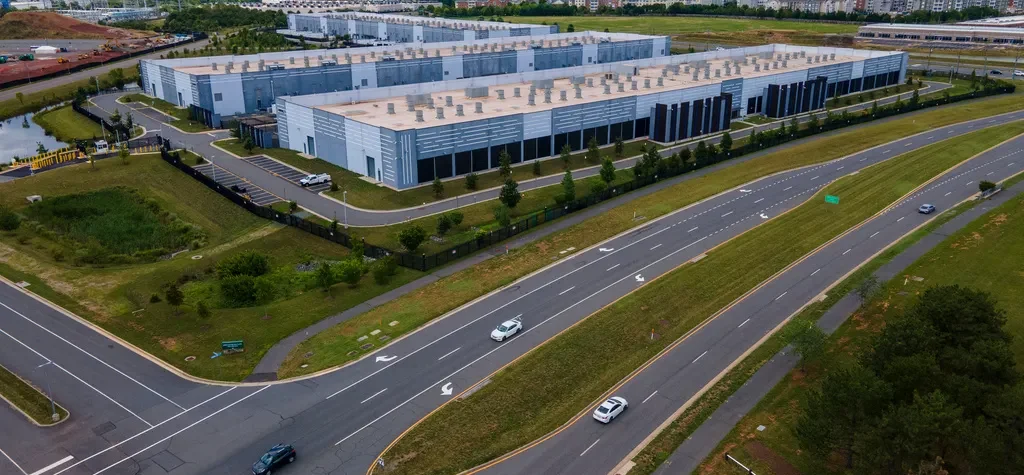
Data center construction is facing a massive public backlash, with 71% of Americans opposing local facilities due to concerns over surging electricity bills, water depletion, and noise pollution. The Data centers, which house computer systems that help train AI models, are blanketing the country, a boom fueled by surging interest in AI and state tax breaks. More than 4,000 are already in operation, mostly in Virginia, Texas, and California, and 3,000 more are being planned or under construction.
Electricity and Energy Demands use massive amounts of power for computing servers. Water Scarcity and Cooling Systems consume millions of gallons of water to cool high-temperature chips, which threatens local supplies during hot and dry weather. Noise and Air Pollution come from industrial cooling units and backup diesel generators that create constant loud buzzing and harmful emissions near residential neighborhoods. State and Local Legislative Backlash has prompted 14 states to attempt bans or delays on new construction, while communities pack local zoning board meetings to block projects.
Electricity bills are going up because nearby AI Data Centers Impact on Electric Bills and large tech facilities cause a massive surge in power demand. Why?
More Expensive Power: To meet sudden high demand, utilities run older, costlier power plants more frequently, which drives up wholesale prices. Massive Energy Use: A single large AI Data Centers Impact on Electric Bills warehouse can use as much electricity as 100,000 homes or a mid-sized town. Grid Upgrades: Utilities must build new power lines, transformers, and generation plants to feed these large loads, passing those multi-billion-dollar costs onto regular local customers. Higher Capacity Charges: Regions with heavy data center concentration (such as areas under the PJM Interconnection grid) see soaring peak-demand fees that inflate monthly bills.
State Legislation & Regulatory Crackdowns
State lawmakers introduced over 300 data center bills across 30 states in early 2026 alone, treating the facilities as heavy industrial users rather than standard commercial entities:
- Ratepayer Protections & Cost Allocation: States are passing laws to ensure that standard utility customers do not subsidize massive power grid upgrades. The Protecting Our Water, Energy, and Ratepayers (POWER) Act in Illinois Legislature forces hyperscale’s to sign 10-year commitments to pay for their own grid and transmission expansions. Similarly, California Public Utilities Commission guidelines require facilities with loads over 25 MW to foot the entire infrastructure bill.
- Executive Mandates & Moratoriums: In late September 2026, Maryland Governor Wes Moore signed a sweeping executive order implementing a centralized standard and public dashboard for all proposed projects over 25 MW, while pushing to fully repeal the state’s data center tax exemptions. Virginia Governor Abigail Spanberger similarly introduced the “Data Center Accountability Framework” to ban corporate non-disclosure agreements with local governments and enforce stringent environmental criteria.
- Water & Environmental Mandates: States like Utah now legally mandate comprehensive data center reporting on water withdrawals, consumption, and efficiency measures.
Proposed Technological & Sustainable Solutions
To survive these shifting regulations, operators are investing heavily in hardware and infrastructure overhauls:
| Sustainable Initiative | Operational Impact |
|---|---|
| Corporate Clean PPAs | Hyperscalers are executing long-term Power Purchase Agreements (PPAs) directly with solar, wind, and geothermal developers to secure green power and bypass local fossil-fuel grids. |
| Liquid & Direct-to-Chip Cooling | Phasing out evaporative air-chilling structures for liquid cooling fluids circulating directly over high-heat AI chips, which dramatically slashes water consumption. |
| Onsite Microgrids & Zero-Carbon Storage | Installing utility-scale battery backups and small modular nuclear or clean hydrogen generators to relieve strain on public grids during peak hours. |
| Waste Heat Recycling | Retrofitting facilities to redirect industrial exhaust heat into nearby municipal district heating systems or agricultural greenhouse operations. |
According to Consumer Report the Data Centers buildout is happening all across the country. While the size of the facilities is startling, their energy use is even more dramatic. A January 2026 report by Bloom Energy, an on-site energy company, predicts that U.S. data centers’ total combined energy demand—how much electricity they may use when up and running—will nearly double between 2025 and 2028, jumping from 80 to 150 gigawatts (GW). That’s like adding a country with the energy needs of Spain in just three years.