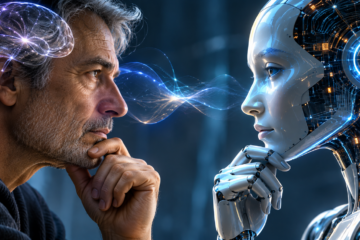
As the United States marks 250 years of independence, the Smithsonian and the Library of Congress are using artificial intelligence to connect historical artifacts, uncover overlooked lives and explore a new way of understanding the past.
Somewhere in the Smithsonian’s vast collections sits a small silver creamer, an ordinary household object from the eighteenth century. It is hardly the kind of artifact that attracts the attention commanded by a famous general’s sword or a document signed by a founding father. Yet that modest object may hold clues to a much larger story.
Using artificial intelligence, researchers working with the Smithsonian Institution and the Library of Congress have connected a similar creamer to newspaper advertisements placed by a silversmith around 1774. The discovery illustrates how a single museum object can become part of a broader historical investigation when records that were once separated are examined together.
The work is part of Revolution Crossroads, an initiative that uses modern technology to explore American life during the Revolutionary era, roughly between 1770 and 1810. As the United States commemorates the 250th anniversary of its independence in 2026, the project offers an intriguing possibility: artificial intelligence may help historians discover stories that have remained hidden in archives for generations.
The History That Museums Cannot Always Tell
Museums preserve an extraordinary record of human civilization. Their collections include paintings, letters, clothing, tools, furniture, photographs, military equipment and countless everyday objects. But preserving an artifact is not the same as understanding its complete history.
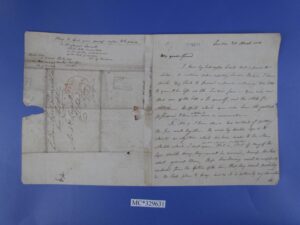
A museum may know when an object was made but little about the person who owned it. A library may preserve a newspaper advertisement mentioning the craftsman who produced a similar item. Another archive may contain a letter, business record or personal document that provides additional clues. The information exists, but it is scattered across institutions, catalogs and historical records that were created long before computers.
Connecting those fragments traditionally requires painstaking research. Historians must search different collections, compare names and dates, interpret old terminology and decide whether apparently related records actually refer to the same people or events. Artificial intelligence may help accelerate part of that process.
Connecting the Pieces of the Past
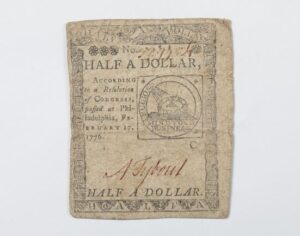
Revolution Crossroads brings together historical records from the Smithsonian and the Library of Congress, allowing researchers to examine materials that were previously difficult to search as a unified collection. The project draws on museum objects, newspapers, letters, maps, military records and other documents from the decades surrounding American independence.
AI tools can help identify names, places, patterns and possible relationships across those materials. A reference in a newspaper might point toward an object in a museum. A name appearing in one collection could lead researchers to records held by another institution. According to Associated Press reporting, the Smithsonian team has identified approximately 10,000 objects associated with people who lived between 1770 and 1810. Some materials have required digitization or renewed digital processing to make them useful for the project.
The goal is not merely to create a faster search engine. It is to help researchers ask questions that would otherwise be difficult to investigate across such large collections. And the results could expand our understanding of who participated in the creation of the early United States.
Beyond Washington and Jefferson
American history is often told through its most recognizable figures: George Washington, Thomas Jefferson, Benjamin Franklin and other political and military leaders. Their contributions are extensively documented. But the American Revolution also involved craftspeople, merchants, farmers, laborers, women, enslaved people, free Black communities and countless others whose experiences were not always preserved in prominent historical accounts. Some left behind little more than a name in a newspaper, a business transaction or a household possession.
These scattered traces are particularly important because they can reveal how ordinary communities functioned during a period of extraordinary political and social change. Becky Kobberod, the Smithsonian’s chief digital and innovation officer, has described the ambition of the project as adding to the public historical record by recovering the identities and stories of people who helped build those communities. That possibility gives Revolution Crossroads a significance extending well beyond museum technology. It could help make the history of America’s founding more inclusive, detailed and human.
Can Artificial Intelligence Be Trusted With History?
The project also raises an important question: What happens when artificial intelligence makes a historical connection that turns out to be wrong? AI systems are powerful at identifying patterns, but similarities are not necessarily evidence.
Two historical documents may mention people with the same name without referring to the same individual. A term used in the eighteenth century may have a meaning unfamiliar to modern readers. An apparent connection between an artifact and an advertisement may be suggestive without proving that the object was made or sold by a particular person. Historical interpretation requires an understanding of language, culture, context and the limits of available evidence.
That is why the Smithsonian emphasizes human oversight. Historians and curators examine AI-assisted findings, evaluate their reliability and provide interpretations that automated systems may miss. The project is also committed to explaining how its tools are used and which sources support the connections it identifies. In this approach, artificial intelligence is not replacing the historian. It is helping the historian discover where to look.
A New Classroom Without Walls
The educational possibilities are considerable. Imagine a student studying the American Revolution who wants to learn not only about battles and political leaders but also about the daily lives of people living in Philadelphia, Boston or rural Virginia.
Instead of consulting isolated sources, that student could explore connections among newspaper advertisements, household objects, maps and personal records. A teacher might use those materials to explain how trade worked, what families owned, how communities communicated or how different groups experienced the revolutionary period.
The same methods could eventually assist research into immigration, local history, industrial development and other subjects where relevant documents are scattered across institutions. For students, the value lies in discovering that history is not simply a collection of dates and established conclusions. It is an ongoing investigation in which new evidence can change our understanding of the past. Artificial intelligence could make that investigative process more accessible, provided its findings remain open to scrutiny.
When Technology Helps Us Remember
The arrival of AI has generated understandable concerns about misinformation, unreliable content and the possibility that automated systems could distort historical understanding. Those risks are real. A convincing but inaccurate account of the past can be especially dangerous when readers have no easy way to verify its sources. But Revolution Crossroads demonstrates another possibility: using artificial intelligence not to manufacture history, but to reconnect fragments of authentic historical evidence. The distinction is fundamental.
An AI-generated story about the eighteenth century is not the same as a carefully documented connection between an artifact and a contemporary historical record. The first may be imaginative. The second, when properly verified, can contribute to historical knowledge.
The Smithsonian’s experiment suggests that some of the most valuable applications of artificial intelligence may involve helping people understand what already exists rather than generating something entirely new. And perhaps the most remarkable discoveries will not concern the familiar names engraved on monuments.
They may concern a silversmith, a shopkeeper, a family or an otherwise forgotten person whose life survives in a few scattered records. Two and a half centuries later, those fragments may finally come together. Artificial intelligence cannot change the past. But, used carefully, it may help us see more of the people who lived through it.
References: Smithsonian Institution, Revolution Crossroads; Library of Congress, The Signal; Associated Press reporting on the initiative.